Introduction-
In today’s
Digital world, many businesses invest heavily in SEO, social media and paid
advertising. The real challenge lies not in attracting visitors but in
converting them into customers. Low conversion rates can drain marketing
budgets and limit growth potential. This is where Conversion Rate
Optimization (CRO) comes in. CRO focuses on improving the effectiveness of
your website so that more visitors take desired actions. By optimizing
conversions, businesses can directly increase revenue, improve efficiency and
achieve sustainable growth without constantly increasing traffic speed.
What Is Conversion Rate Optimization (CRO)?
CRO is the
process of increasing the percentage of website visitors who complete a
specific goal. CRO is about making your website work smarter, not harder. In
simple words, CRO helps businesses get more value from the traffic they already
have. It may include product purchases, lead from submissions, email sign-ups,
app downloads, demo-requests or injuries.
How Conversion Rate Optimization Works-
CRO begins with understanding user behavior.
Businesses analyze how users navigate a website, where they drop off and what
prevents them from converting. This understanding is built using data,
analytics tools, heatmaps, session recordings and user feedback.
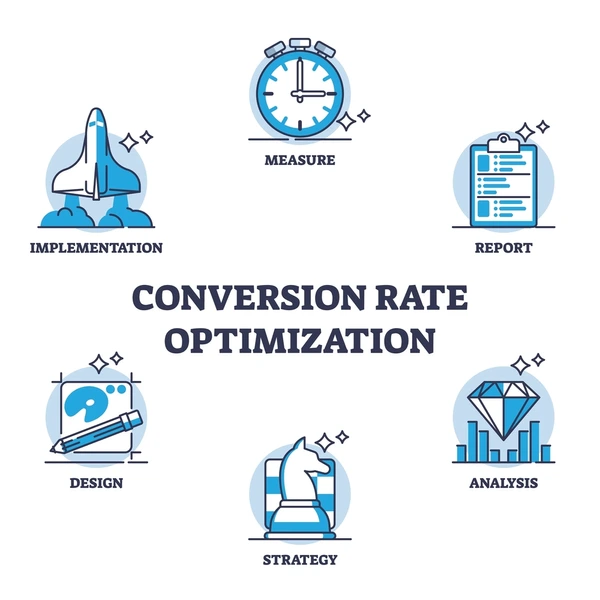
The CRO process generally follows five key steps. Research where data
and user behavior insights are collected. Next is Hypothesis creation, where
potential improvements are identified based on observed problems. The third step
is testing, then comes analysis where results are measured to determine what
worked. Finally, successful changes are implemented and continuously refined.
Why CRO Matters for Business Growth-
CRO plays a critical role in sustainable business
growth. One of its biggest advantages is that it increases revenue without
increasing advertising costs. It improves return on investment for marketing
campaigns. CRO ensures that SEO, PPC and social media efforts deliver maximum
value. Additionally, optimized websites provide a better user experience,
leading to higher customer satisfaction and trust. CRO helps businesses scale
efficiently and gain a competitive advantage, especially in crowded digital
markets where attracting new traffic is becoming increasingly expensive.
Key Elements of Conversion Rate Optimization-
Several elements influence conversion rates.
Website UX/UI design plays a major role in guiding users smoothly toward
action. Page load speed and mobile optimizations are equally critical, slow or
unresponsive sites lead to higher bounce rates.
Clear and compelling calls to action (CTAs) tell
users exactly what to do next. Trust signals such as reviews, testimonials,
certifications and security badges build credibility. Persuasive copywriting addresses
user pain points and highlights benefits clearly.
Common
Types of CRO Conversions-
Different
industries focus on different conversion types. eCommerce conversions include
product purchases and add to cart actions. Lead generation conversions focus on
form submissions and inquiries. SaaS and subscription-based businesses aim for
free trials, demos or paid sign-ups. Education and service-based websites
prioritize enrolments, bookings, or consultation requests.
CRO Techniques That Drive Higher Conversions-
Effective CRO relies on proven techniques. A/B testing
and multivariate testing help identify what resonates most with users. Landing
page optimization ensures pages are aligned with user intent and traffic
sources.
Funnel optimization improves the journey from entry
point to conversion, while form optimization reduces friction by simplifying
inputs. Personalization and behavioral targeting tailor experiences based on
user preferences and actions, significantly improving engagement.
Tools Used for CRO-
CRO relies on a
variety of tools. Analytics platforms like Google Analytics and GA4 provide
performance data. Heatmaps and session recording tools reveal user behavior
visually. A/B testing tools help experiment with design and content variations,
while user feedback and survey tools offer direct insights from visitors.
CRO vs SEO vs PPC: How They Work Together- SEO, PPC, and CRO serve
different but complementary roles. SEO drives organic traffic, PPC delivers
immediate visibility, and CRO ensures both convert effectively. CRO multiplies
the impact of SEO and PPC by improving performance after the click, creating an
integrated and efficient digital growth strategy.
Common CRO Mistakes to Avoid-
Businesses often make
mistakes such as testing without sufficient data, ignoring mobile users, or
making changes based on assumptions rather than insights. Another common error
is focusing only on visual design while neglecting messaging and user intent.
How to Get Started with CRO-
Getting started with CRO
begins with auditing your current website and identifying key conversion goals.
Focus on high-impact pages such as landing pages and checkout flows. Set
measurable KPIs and commit to continuous testing and improvement.
Conclusion- Conversion Rate Optimization
is not a one-time task but a long-term growth strategy. By focusing on
data-driven improvements, businesses can increase revenue, enhance user
experience, and gain a competitive edge. In today’s digital landscape, CRO is
no longer optional—it is essential. Start optimizing today to turn traffic into
sustainable growth.