Introduction-
A database is a place where businesses store & manage their data digitally. From customer details & sales records to inventory and analytics, data has become the backbone of modern businesses. To manage the data efficiently, businesses rely mainly on two types of databases – SQL & NoSQL. Each serves different purposes and business needs.
This Article, explains what databases are, why they are essential for businesses and clearly compares SQL & NoSQL databases to help you choose the right one.
What is Database?
A database is an organized collection of data that can be easily accessed, managed & updated. Unlike, simple data storage, databases are designed to handle large volumes of data efficiently & securely.
Types of Business Data stored in Databases-
1.Customer information
2.Sales & Transactions record
3.Inventory & Supply chain data
4.Employee records
5.Website & App Analytics
The key difference between basic data storage and database management is control and intelligence. Databases allow querying, filtering, reporting and automation- making data truly useful for business operations.
Why Databases are important for Businesses?
1.Centralized Data Management-
Databases act as a single source of truth. All departments access the same data, reducing duplication, inconsistencies and errors. This improves coordination across teams.
2.Improved Decision-making-
Databases power reporting tools and analytics dashboard. Managers can access real-time data to track performance, identify trends and make informed decisions quickly.
3.Data security & Access control-
Modern databases offer role-based access control, ensuring that sensitive data is only accessible to authorized users.
4.Business Scalability-
Databases are designed to scale efficiently, supporting start-ups as well as large enterprises without performance issues.
5.Automation & Efficiency-
Databases integrate with websites, ERP systems, CRM tool and automation software, reducing manual work and speeding up business processes.
Understanding SQL Databases-
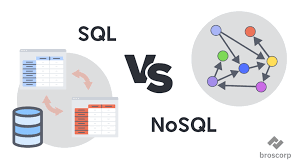
SQL (Structured Query Language) is used to manage and query relational databases. SQL databases store data in structured tables with rows and columns.
Key Features-
*Fixed Schemas and structured tables
*ACID compliance (Atomicity, consistency, isolation, durability)
*High data integrity and consistency.
Popular SQL Databases-MySQL, PostgreSQL, Microsoft SQL server, Oracle Databases.
Business use cases for SQL-
SQL databases are ideal for systems where accuracy is critical, such as- Banking & Financial systems, ERP & CRM platforms, E-Commerce transaction management.
Understanding NoSQL Databases-
NoSQL is stand for “Not only SQL”. These databases are designed to handle large volumes of unstructured or semi-structured data with high flexibility.
Types of NoSQL Databases-
1.Document-based – MongoDB
2.Key-value stores – Redis
3.Column-based – Cassandra
4.Graph Databases - Neo4j
Key Features of NoSQL Databases-
*Flexible or dynamic schemas
*Horizontal scalability
*High performance for big data and real-time applications
Business use Cases of NoSQL-
*Real-time analytics
*IoT and big data applications
Which Database is Right for your Business?
Choosing the right database depends on-
*Types of data (structured vs unstructured)
*Scalability requirements
*Budget & technical resources
*Performance and speed needs
Small businesses often start with SQL databases due to simplicity, while enterprises may use NoSQL for scale. Many modern companies adopt a hybrid approach, using both SQL and NoSQL together.
Role of Databases in Modern Business Applications-
Databases power:
*Web & Mobile applications
*Cloud-based platforms
*AI, Analytics and machine learning systems
*Automation tools & third-party integrations.
Without databases, modern digital businesses cannot function efficiently.
Why Learning Databases Is Essential for Web Developers-
Databases are a core part of full-stack development. SQL and NoSQL skills are in high demand, offering strong career growth, better salaries, and broader job opportunities for developers.
Conclusion-
Databases are critical for storing, managing & analyzing business data. SQL databases provide structure and reliability while NoSQL databases offer scalability & flexibility. There is no one size fits all solution- the best choice depends on business needs, data type and growth plans. In many cases, using both together delivers the best results.
FAQs-
1.Is SQL better than NoSQL? Not always. SQL is better for structured data; NoSQL is better for flexibility and scale.
2.Can businesses use both SQL and NoSQL together? Yes, many modern systems use a hybrid approach.
3.Which database is best for startups? SQL databases are often ideal for startups due to simplicity and cost-effectiveness.
4.Do all businesses need databases? Yes. Any business handling digital data benefits from using databases.